
Did you know that companies using A/B testing see an average conversion rate improvement of 49% compared to those that don’t? And according to HubSpot, popups can boost conversion rates by up to 300% when optimized correctly, yet despite these numbers, most marketers still rely on guesswork when designing their popups, leaving valuable leads on the table.
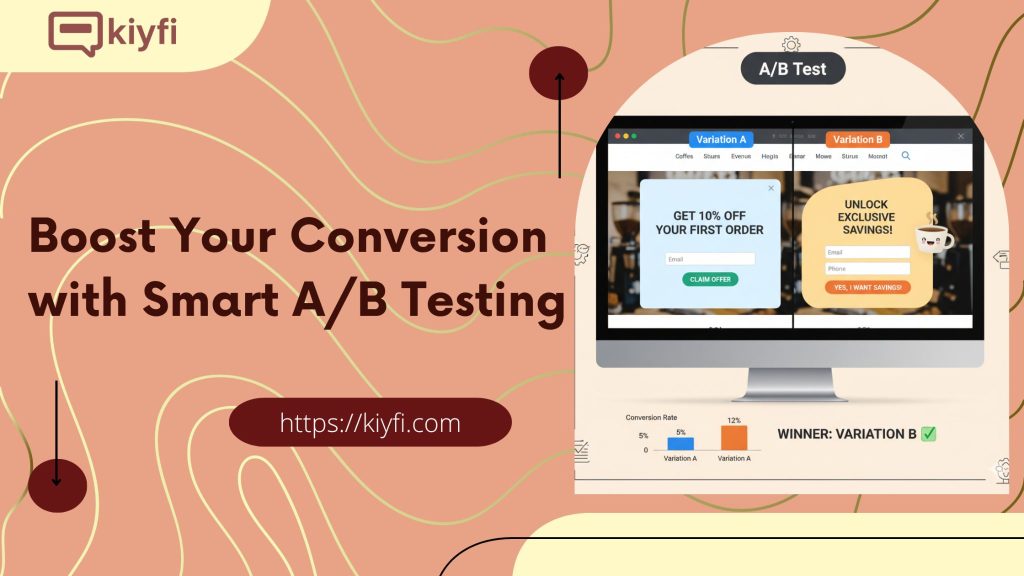
That’s where A/B testing comes in. If you want your popups to perform at their best, running systematic tests helps you understand what actually works for your audience. In this post, we will walk you through how to use A/B testing to improve popup performance, and how tools like Kiyfi make it easier than ever to design, test, and optimize engaging popups and sticky bars.
What Is A/B Testing for Popups?
A/B testing, also called split testing, is a simple but powerful method to compare two versions of the same popup, Version A and Version, to see which one performs better.
For example, you might test two popups with different:
- Headlines (“Get 10% Off” vs. “Save 10% on Your First Order”)
- Colors or images
- Call-to-action (CTA) buttons
- Timing or triggers (e.g.: exit intent vs. time on page)
- Offers or incentives
By splitting your website traffic between the two versions, you can analyze which version gets more clicks, sign-ups, or conversions. Over time, this helps you make decisions based on data—not guesses.
Why A/B Testing Is Essential for Popup Success
Even the most beautifully designed popup will not succeed if it does not connect with your audience. A/B testing allows you to continuously refine your messaging and design until you find the perfect combination that maximizes engagement.
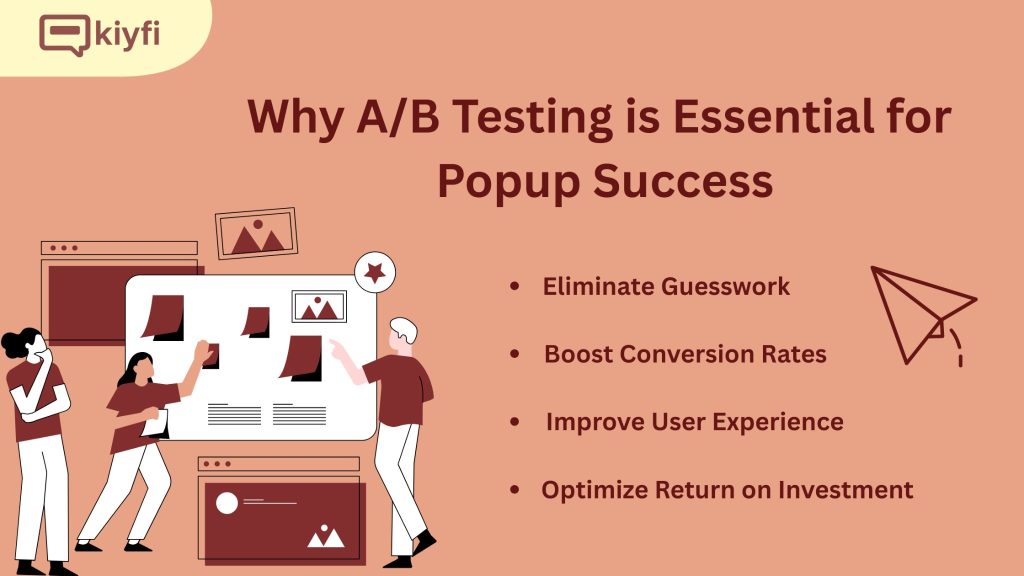
Here are a few key benefits:
- Eliminate Guesswork: Instead of relying on assumptions, A/B testing shows you what your visitors truly respond to.
- Boost Conversion Rates: Small tweaks, like changing button color or CTA text, can significantly increase conversions.
- Improve User Experience: You will discover which popups engage visitors without being intrusive.
- Optimize ROI: By continuously testing, you make the most of every visitor and every marketing dollar.
In short, A/B testing transforms popups from simple visuals into strategic conversion tools.
Step-by-Step Guide to A/B Testing Your Popups
Let’s break down the process so you can start improving your popup performance immediately.
1. Define Your Goal
Before running any test, identify what you want to achieve. Are you aiming to:
- Increase email sign-ups?
- Boost coupon code redemptions?
- Reduce cart abandonment?
Your goal will determine what metrics you will measure, like conversion rate, click-through rate (CTR), or engagement time.
2. Create Two Variations
Start with one element at a time. For example, test two different headlines while keeping everything else the same. If you change too many elements, you will not know which factor caused the improvement.
If you are using Kiyfi, you can easily clone your popup design and make quick edits—like adjusting colors, text, or timing—to create Version B in just minutes.
3. Split Your Traffic
Once your two versions are ready, show them to different segments of your visitors. Half see Version A, and half see Version B. Over time, you will gather enough data to determine which version performs better.
Kiyfi’s built-in testing tools make this step seamless. You can set your traffic distribution automatically and monitor performance in real-time from your dashboard.
4. Analyze the Results
After running your test for a sufficient period (usually a few days or weeks, depending on traffic), analyze the results. Look at:
- Conversion rates
- Click-through rates
- Time on page after popup interaction
- Bounce rates
Statistical significance matters. Don’t stop a test too early; ensure you have enough data to make a confident decision.
5. Implement the Winning Version and Keep Testing
Once you identify a clear winner, implement it permanently. But don’t stop there! A/B testing is an ongoing process. Test new ideas regularly to stay ahead of audience preferences and market trends. With Kiyfi, you can automate this process by continuously testing new variations and tracking their performance effortlessly.
Best Practices for Effective Popup A/B Testing
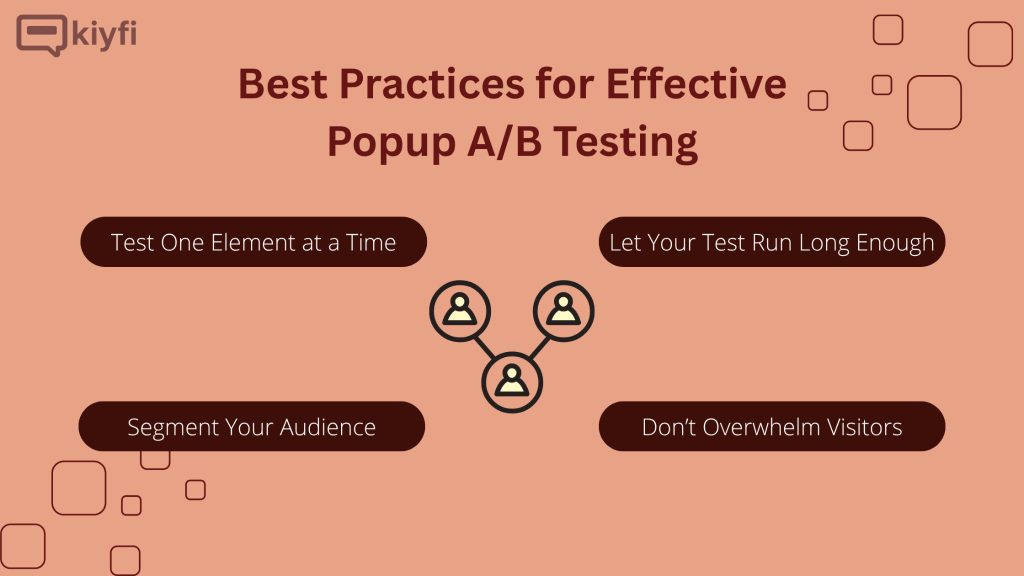
To make your tests meaningful and reliable, keep these best practices in mind:
- Test One Element at a Time: Isolate variables for clearer results.
- Be Patient: Let your test run long enough to gather sufficient data.
- Segment Your Audience: Test different popups for desktop vs. mobile users or first-time vs. returning visitors.
- Use Clear CTAs: Your call-to-action should be concise, action-oriented, and benefit-driven.
- Don’t Overwhelm Visitors: Ensure your popup enhances the experience rather than interrupting it.
How Kiyfi Makes A/B Testing Simple and Effective
Manually setting up A/B tests can be time-consuming, especially if you are juggling multiple popups across different campaigns. That’s where Kiyfi comes in.
Kiyfi is an intuitive tool for creating and optimizing sticky bars, popups, and on-site messages—no coding required. With Kiyfi, you can:
- Design beautiful, high-converting popups using drag-and-drop templates.
- Set up A/B tests in just a few clicks.
- Analyze performance with real-time data and visual reports.
- Automatically display winning popups to maximize conversions.
Whether you are running an eCommerce store, blog, or SaaS website, Kiyfi helps you convert more visitors while maintaining a smooth user experience.
Final Thoughts
A/B testing is not just for big marketing teams, it’s for anyone who wants to make smarter decisions and get better results from their popups. By testing, learning, and improving continuously, you can turn simple website popups into powerful conversion drivers.If you are ready to start optimizing your popups with ease, try Kiyfi today. With its intuitive design tools and built-in A/B testing features, you will be able to boost engagement, capture more leads, and grow your business faster—one popup at a time.
Ready to see what really works for your audience? Log in to Kiyfi now!