

Website conversion is no longer just about design or traffic—it’s about how intelligently your website responds to user behavior. That’s where dynamic website elements for CRO come in, enabling personalized and adaptive user experiences. Static websites, where every visitor sees the same content, are quickly losing effectiveness.
Today, users expect experiences that feel relevant and personalized. This is where dynamic website elements come in—helping brands turn passive visitors into active users.
With platforms like Kiyfi, businesses can easily create these adaptive experiences using sticky bars and popups that respond to real user behavior.
Why Dynamic Website Elements Are the Future of CRO?
Traditional websites rely on fixed banners, static CTAs, and generic messaging. While these may provide visibility, they often fail to connect with users on a deeper level.
This leads to:
- Low engagement
- Banner blindness
- Missed conversion opportunities

On the other hand, behavior-driven personalization changes the game. Instead of guessing what users want, you respond to what they actually do.
Dynamic elements allow you to:
- Show the right message at the right time
- Adapt content based on user actions
- Improve engagement and conversions naturally
This shift from static to dynamic is exactly why modern conversion optimization strategies are evolving—and why tools like Kiyfi are becoming essential.
What Are Dynamic Website Elements & How They Work?
Dynamic website elements are components that change based on user behavior in real time.
Instead of showing the same content to everyone, Kiyfi helps you create experiences powered by:
- Time spent on a page
- Scroll depth
- Click behavior
- Device type
- Returning visits
For example, a new visitor might see a welcome offer, while a returning user sees a limited-time deal. This level of personalization makes interactions more relevant and effective.
Unlike static elements, these dynamic experiences continuously adapt—ensuring your messaging always aligns with user intent.
To understand how behavior-based personalization works in more depth, you can explore this detailed guide by HubSpot.
Source: https://blog.hubspot.com/marketing/behavioral-targeting
Key Components of Dynamic CRO Strategies
A strong dynamic CRO strategy is built on the right combination of elements and triggers.
Sticky Bars and Popups for Conversion
Sticky bars keep your message visible without interrupting the experience, while popups capture attention at key moments. Together, they create a powerful engagement system using Kiyfi’s no-code popup builder and sticky bar tools.
User Behavior Targeting
With Kiyfi, you can trigger messages based on:
- Scroll activity
- Time on page
- Click behavior
- Device and location
This ensures your communication is always context-aware.
Real-Time Triggers and Personalization

Dynamic triggers allow your website to react instantly. Whether it’s showing an offer before exit or highlighting a feature after engagement, timing becomes your biggest advantage.
How Behavior-Driven Personalization Improves Conversions?
Users don’t respond to generic messages—they respond to relevance.
Behavior-driven personalization helps you:
- Match messaging with user intent
- Deliver personalized website experiences
- Reduce bounce rates
- Increase engagement
For example, instead of showing a random popup, you can display a targeted message only after a user has engaged with your content. This makes the interaction feel helpful rather than intrusive.
With Kiyfi, this level of personalization is simple to implement—no coding required.
Use Cases of Dynamic Website Elements Across Industries
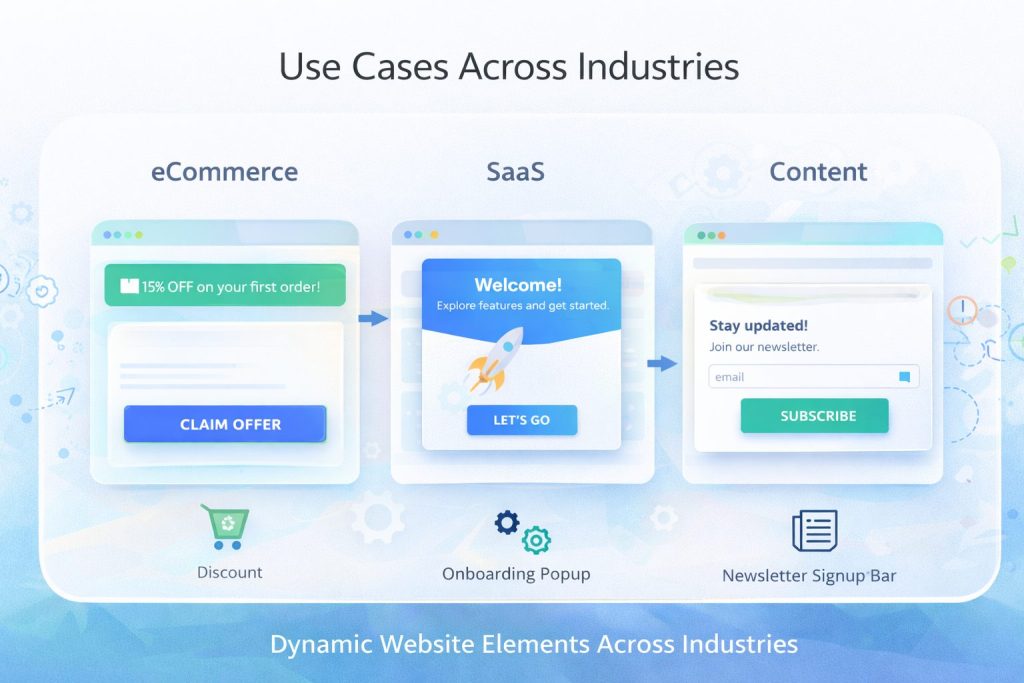
Dynamic elements are not limited to one type of business—they work across industries.
eCommerce
- Show discounts to users about to leave
- Highlight urgency with limited-time offers
- Recover abandoned carts with targeted messages
SaaS
- Guide users with onboarding prompts
- Promote features based on usage behavior
- Improve activation with contextual CTAs
Content Websites
- Trigger newsletter signups after engagement
- Promote lead magnets based on scroll depth
- Increase time on site with relevant suggestions
These use cases show how Kiyfi transforms simple website elements into conversion-focused tools.
Best Practices for Implementing Dynamic Website Elements
To get the best results, it’s important to focus on strategy—not just implementation.
- Right Timing & Placement: Show messages only when users are engaged
- Avoid Overuse: Too many elements can overwhelm users
- Clear CTAs: Keep your messaging simple and action-driven
- Continuous Optimization: Test and refine what works best
Kiyfi makes it easy to apply these best practices with flexible targeting and real-time controls.
Conclusion
Dynamic website elements are shaping the future of CRO. By moving beyond static content and embracing behavior-driven personalization, you can create experiences that feel relevant, timely, and engaging.
With Kiyfi, building these experiences becomes simple, scalable, and highly effective. From sticky bars to popups, every interaction can be optimized to drive better results.
If you’re ready to move beyond traditional strategies and start converting smarter—
👉 Start using Kiyfi to build dynamic, high-converting website experiences today.