
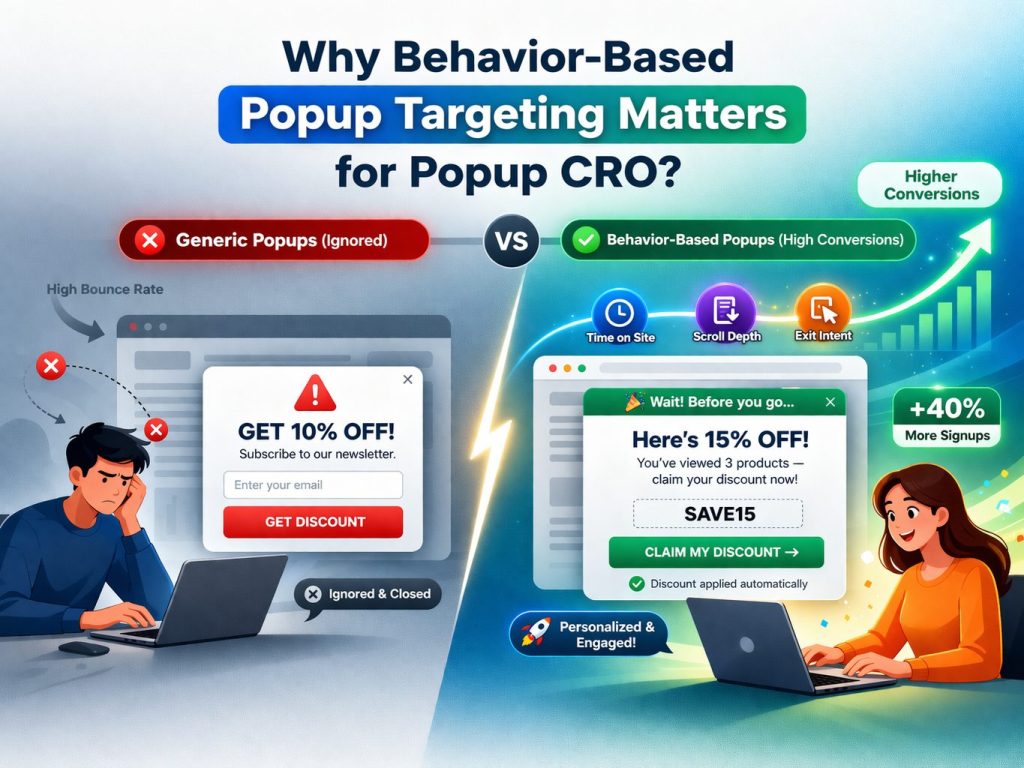
Generic popups are no longer effective. Showing the same message to every visitor, regardless of their behavior, often leads to low engagement and high bounce rates.
Today’s users expect personalized experiences. They want content that matches their intent, actions, and stage in the journey. This is where behavior-based popup targeting becomes essential.
By using personalized popups for conversion, you can deliver the right message at the right time. Instead of interrupting users, you guide them – resulting in better engagement and improved popup CRO.
What is Behavior-Based Popup Targeting & How It Works?
Behavior-based popup targeting is a strategy where popups are triggered based on how users interact with your website.
Instead of displaying popups randomly, this approach uses user behavior tracking for CRO (Source: https://blog.hubspot.com/marketing/behavioral-targeting) to analyze actions such as:
- Time spent on a page
- Scroll depth
- Click activity
- Exit intent
This allows you to show highly relevant messages tailored to each user.
Unlike traditional popups, which are static and generic, behavioral targeting popups adapt in real-time. This makes them far more effective for conversion rate optimization popups.
Types of Behavioral Triggers Used in Popups
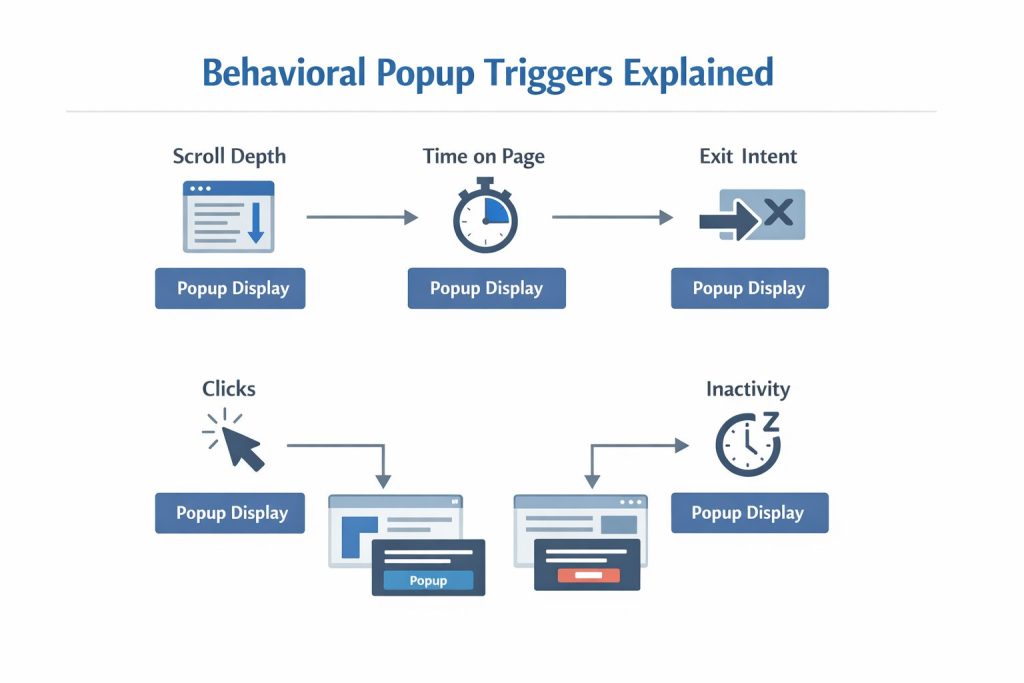
To implement effective popup targeting strategies, you need to understand the key behavioral triggers:
Time-Based Triggers
Popups appear after a user spends a specific amount of time on a page. This ensures they are already engaged before seeing your message.
Scroll-Based Triggers
Triggered when a user scrolls a certain percentage of the page, indicating interest in your content.
Click-Based Triggers
Activated when users click on a button or link, showing high intent.
Exit Intent Popup Optimization
One of the most powerful triggers. It detects when a user is about to leave and shows a targeted message to retain them.
Inactivity Triggers
Used to re-engage users who have been idle for a certain period.
These triggers form the foundation of high-performing behavioral targeting popups.
Best Popup Targeting Strategies for Higher Conversions
To maximize results, combine behavioral triggers with smart targeting strategies:
- New vs Returning Users
Show onboarding popups to new users and offers to returning visitors. - Cart Abandonment Targeting
Display discounts or reminders when users leave items in their cart. - Device & Geo Targeting
Customize popups based on device type or user location. - Intent-Based Messaging
Align popup content with user actions for better relevance.
These popup targeting strategies help create meaningful interactions, ultimately improving your popup CRO.
Personalized Popups for Conversion
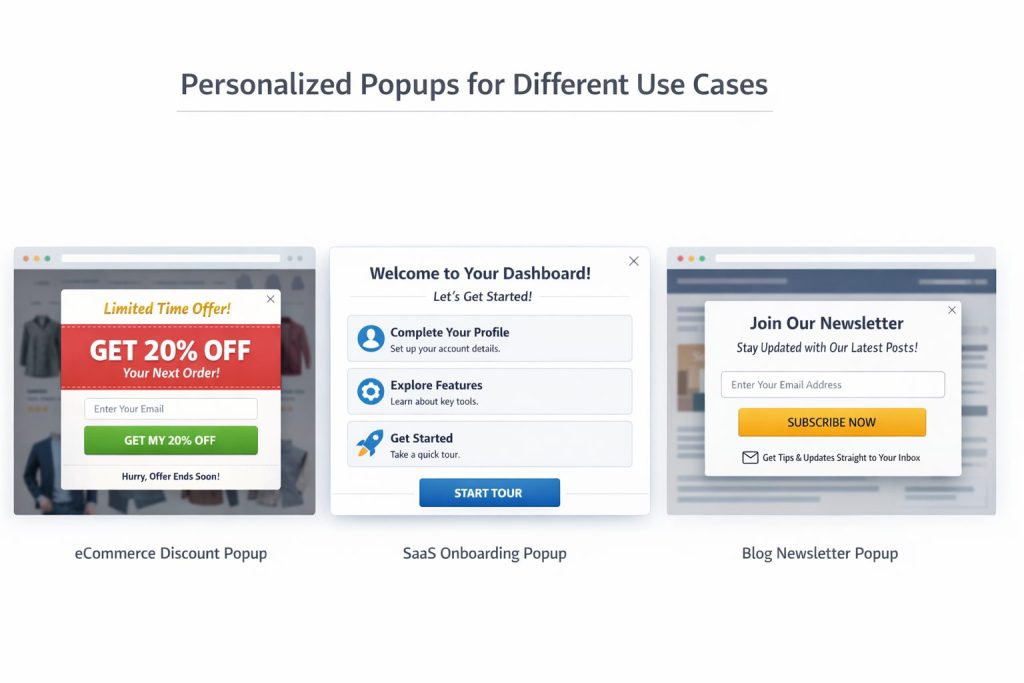
eCommerce:
- Offer discounts to users about to abandon their cart
- Show free shipping bars based on location
SaaS:
- Guide new users with onboarding popups
- Highlight features based on user actions
Content Websites:
- Display lead magnets after users read a certain percentage of the article
- Offer newsletter subscriptions based on engagement
These examples show how personalized popups for conversion can significantly increase engagement and drive results.
Common Mistakes & Advanced Tips for Conversion Rate Optimization Popups
Mistakes to Avoid:
- Showing popups too early
- Overloading users with too many popups
- Ignoring mobile responsiveness
- Not aligning popups with user intent
Advanced Tips:
- Combine multiple triggers for better accuracy
- Use clear and compelling CTAs
- Continuously A/B test your popups
- Optimize timing and messaging
Improving these areas will help you get the most out of your conversion rate optimization popups.
Conclusion
Behavior-based popup targeting is no longer optional – it’s essential for modern websites. By leveraging user behavior, you can create smarter, more relevant experiences that drive real results.
From better engagement to higher conversions, the impact on popup CRO is significant when done right.
If you’re ready to move beyond generic popups and start using data-driven strategies, now is the time to act.
👉 Start optimizing your popups with Kiyfi and turn user behavior into conversions.