
Imagine this: You are deeply engaged in reading an article or browsing a product page, and suddenly—a popup slides onto your screen. Your first instinct? Probably to close it. Yet, what if that very popup could become the reason you trust the brand more, not less?
Welcome to the art (and science) of creating popups that build trust —Kiyfi.
Did you know that over 70% of website visitors who leave a site never return? Yet, according to Sumo’s analysis of 1.7 billion popups, the average conversion rate for well-designed popups is 3.09%, and the top-performing ones reach an incredible 9.28% or higher. That’s not just a number—it is a massive opportunity.
But here’s the catch: most users don’t like popups. They can feel intrusive, manipulative, or downright annoying. So how do some brands turn them into trust-building tools instead of interruptions? The answer lies in ethical conversion—and understanding how to design popups that respect users, deliver value, and strengthen your brand’s credibility.
The Misunderstood Popup: From irritation to Cultivation
Popups have a bad reputation, and rightfully so—many marketers abuse them. Blinking exit-intents, irrelevant offers, or auto-play videos make users feel tricked rather than cared for.
However, popups themselves are not the problem. The intent behind them is what makes all the difference. A popup that prioritizes user experience can become a moment of connection instead of interruption.
Think of it this way: a popup is not just a sales tool—it is a conversation starter. When done ethically, it allows you to say, “Hey, I see you are interested in this—here’s something that could genuinely help.”
What Is Ethical Conversion?
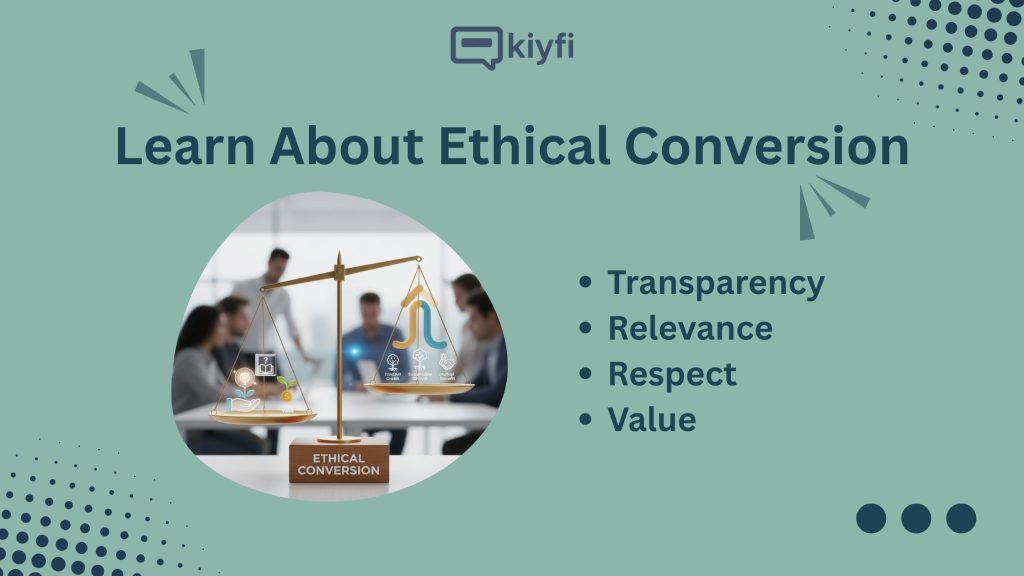
Ethical conversion is the practice of driving engagement or sales while maintaining honesty, transparency, and user consent. Instead of using dark patterns or manipulative copy, ethical conversion focuses on earning trust through authenticity.
Here’s what that looks like in the world of popups:
- Transparency: Clearly state why the popup appears and what value the user gets.
- Relevance: Show popups based on user behavior or interest—not random timing.
- Respect: Make it easy to close or ignore without punishment.
- Value: Offer something meaningful—like a discount, guide, or personalized recommendation.
When users feel respected, they don’t just convert—they stay loyal.
Why Trust Is the New Currency in Conversions
In today’s digital world, trust is everything. A 2024 Edelman Trust Barometer report found that 81% of consumers say they need to trust a brand before buying from it. That means your first impression—often made through your website—is crucial.
Popups, when crafted ethically, can enhance that first impression instead of ruining it. For example:
- A personalized welcome popup that greets returning visitors by name shows recognition and care.
- A transparent cookie consent bar signals compliance and honesty.
- A content upgrade popup offering a free guide relevant to the page builds credibility through value.
Each of these touchpoints reinforces the message: “You can trust us.”
The Psychology Behind a Trust-Building Popup
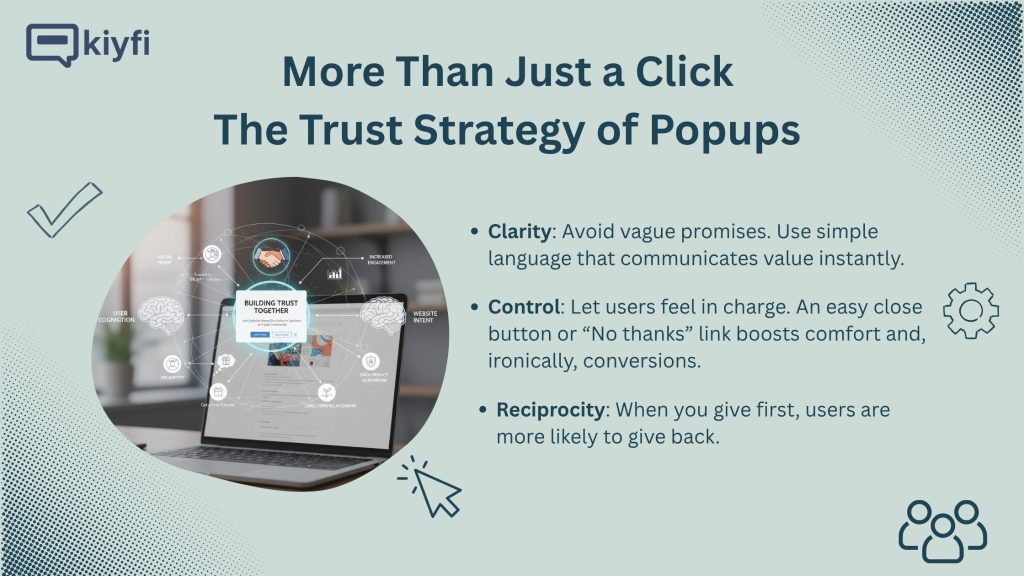
Humans are wired to respond positively to clarity, reciprocity, and control—three principles that can transform your popup strategy:
- Clarity: Avoid vague promises. Use simple language that communicates value instantly.
Example: “Get our free 10-step SEO checklist” works better than “Subscribe for more updates.” - Reciprocity: When you give first, users are more likely to give back. Offer something genuinely useful—discounts, insights, or early access.
- Control: Let users feel in charge. An easy close button or “No thanks” link boosts comfort and, ironically, conversions.
When users sense honesty, they don’t just click—they commit.
Turning Popups Into Relationship Builders
To transform popups from conversion tools into trust-building experiences, follow these best practices:
- Segment Your Audience: Tailor popups to behavior. A first-time visitor should not see the same offer as a loyal customer.
- Time It Right: Don’t interrupt reading flow. Trigger popups based on scroll depth or exit-intent.
- Keep Design Clean: Avoid flashy animations; minimalistic layouts appear more credible.
- Provide Context: Briefly explain why you are asking for an email or action.
- Test and Iterate: Track conversion rates and adjust messages for authenticity and clarity.
When every popup feels like a helping hand—not a pushy ad—you build micro-moments of trust that compound over time.
Ethical Conversion in Action: How Kiyfi Helps You Do It Right
Building ethical, high-performing popups doesn’t have to be complicated. Kiyfi is a smart tool designed to help brands create beautiful, respectful, and high-converting popups and sticky bars—without the sleaze.
With Kiyfi, you can:fro
- Personalize messages for every visitor segment.
- Trigger popups intelligently—based on behavior, time, or intent.
- Stay compliant with GDPR and privacy best practices.
- A/B test designs to find what builds the most trust.
Kiyfi turns ethical conversion into a repeatable, data-driven strategy—so every popup adds value not friction.
Final Thoughts: Trust Converts Better Than Tactics
A popup can either break trust—or build it. The difference lies in intent, design, and empathy. When you focus on ethical conversion, you are not just chasing numbers—you are building relationships that last.Because at the end of the day, users don’t remember the popup that appeared.
They remember how it made them feel.
Ready to Build Popups That Earn Trust?
Start crafting ethical, conversion-friendly experiences today with Kiyfi—the easiest way to design popups and sticky bars that users love instead of avoid.
Try Kiyfi today and turn your popups into trust-building power tools.